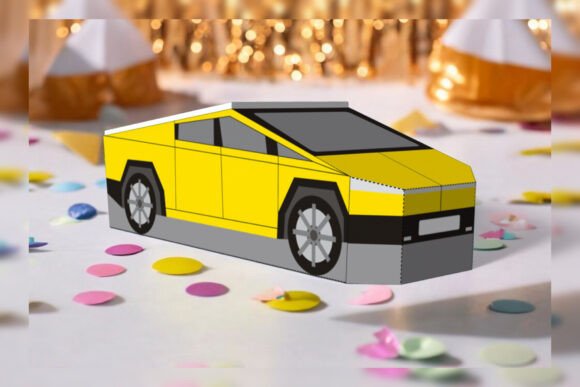
Food Car Box - 3d Papercraft: A Designer's Review
As a designer who spends more time staring at stitch maps than most people spend watching television, I approach every new machine embroidery design with a healthy dose of skepticism. We have all been there: you download a file that looks adorable on the screen, only to find out it turns into a puckered mess of thread nests once it hits the fabric. That is why I took a close look at the Food Car Box - 3d Papercraft before committing it to any client projects or personal handmade products. While the product description highlights its origins as a paper assembly project with an assembling time of 30 minutes and specific dimensions of 10 x 10 x 28 CMS, my job is to translate that visual concept into the language of thread and needle.
First Impressions and Visual Personality
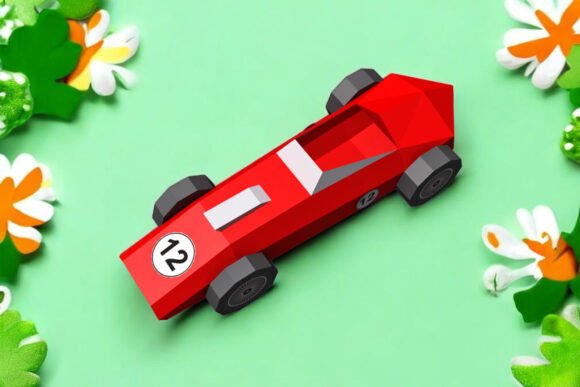
The first thing that strikes me about the Food Car Box - 3d Papercraft is its playful, whimsical mood. It belongs to the Shapes category, which often implies bold, recognizable silhouettes, and this design delivers on that front. The concept of a "food car" suggests a fusion of two universally loved themes: vehicles and snacks. This makes it an instant conversation starter. Visually, the layout feels balanced, with a clear focal point that would translate well into a satin stitch or a dense fill stitch application.
However, because the original asset is described as a 3D SVG intended for papercraft using a colored printer, glue, and scissors, we have to be careful. As embroiderers, we are not gluing paper; we are building dimension with thread. The charm of this design lies in its cartoonish proportions. It does not try to be hyper-realistic, which is a blessing for embroidery. Realism often requires impossible stitch counts and tiny details that break under tension. This design's simplified, graphic nature makes it a strong candidate for custom apparel and boutique branding where clarity is king.
Real-World Application Scenarios
Let's move from theory to practice. Imagine you are preparing a custom order for a local bakery or a food truck owner who wants branded merchandise. They need something fun but professional. The Food Car Box - 3d Papercraft fits perfectly here. I can visualize this stitched onto a canvas tote bag design meant for carrying groceries or farmers' market finds. The bold shapes would stand out against natural cotton, creating a high-contrast look that screams "handmade quality."
Another excellent use case is baby embroidery. Nursery decor is always looking for unique motifs that aren't just the standard bears or blocks. A food-themed vehicle could be the centerpiece of a pillow cover or a wall hanging in a child's playroom. Because the design is categorized under Shapes, it likely has clean edges that define the object clearly, making it easy for a child to recognize. For an Etsy seller specializing in personalized gifts, this could be the star of a holiday gift set—perhaps embroidered on a kitchen towel or an apron for a young chef.
If you are running a small shop product line, consistency is key. Using this design across different items, like a sweatshirt and a cap, helps build brand recognition. However, the application method changes based on the substrate. On a sweatshirt embroidery project, the texture of the fleece adds depth, but you must ensure the stitch density isn't so high that it causes the fabric to pucker or become stiff. On a structured cap, the curved surface presents a challenge; the design needs to be tested to ensure the "car" doesn't look distorted when wrapped around the front panel.
Technical Considerations for Embroidery
Here is where we need to be honest and practical. The source material for Food Car Box - 3d Papercraft is a digital file meant for printing and cutting paper. If you are purchasing this as a reference image to digitize yourself, or if it comes with an embroidery file conversion, you must scrutinize the details. Paper allows for sharp, 90-degree corners and intricate cut-outs that thread simply cannot replicate without a lot of frustration.
When adapting this for embroidery, pay close attention to the small details. Tiny lettering or minute decorative accents that work in print often disappear or turn into bird's nests in embroidery. If the design includes thin lines, consider converting them to a running stitch or slightly thickening them to ensure durability. For areas that require solid color blocks, a fill stitch with appropriate underlay is essential to prevent the fabric from showing through, especially if you are working on dark fabric.
Fabric choice is critical. This design would shine on stable woven fabrics like cotton twill, denim, or canvas. Be very cautious using it on stretchy fabrics like jersey knits unless you are an experienced handler of stabilizers. The weight of the thread needed to fill the "car" shape could cause the garment to warp over time. Speaking of stabilizer, do not skimp here. Given the likely density required to make the colors pop, a cut-away stabilizer is probably your best friend for long-term wearability, especially for items like embroidered patches that will be handled frequently.
Designer Notes and Best Practices
Before you stitch this onto a customer's expensive jacket, always test the design on scrap fabric first. This is non-negotiable. Check the thread color contrast; sometimes what looks vibrant on a monitor looks muddy when stitched. Review the stitch density settings in your software. If the design feels too heavy, consider reducing the density slightly to maintain the softness of the finished product.
Confirm your hoop size capabilities. While the paper version is 10 x 10 x 28 CMS, the embroidered version might need to be scaled down to fit standard hoops, particularly for smaller items like baby clothes or pockets. Inspect small details closely after your test run. Are the corners crisp? Is the coverage even? It is also wise to test the design in black and white mockups to see how the values hold up without relying on color.
Finally, let's talk about licensing and commercial use. Since the original description mentions "Non-working" and lists tools like a craft knife and scorer, it is vital to confirm whether the file you are buying includes the rights to sell finished embroidered items. Many digital product sellers offer files for personal use only. If you are an apparel decorator or a creative entrepreneur planning to sell these as design assets or finished goods, read the license terms carefully. Do not assume that because it is a "shape" or a "3D SVG" that it is free for commercial embroidery projects.
In conclusion, the Food Car Box - 3d Papercraft offers a delightful aesthetic that bridges the gap between playful illustration and tangible craft. With careful digitization adjustments, the right choice of thread colors, and a respect for fabric limitations, it can become a standout piece in your portfolio. Whether you are creating a holiday embroidery gift or stocking your online store with unique printable mockup inspired goods, this design has the potential to delight customers—if treated with the technical respect it deserves.